Coins become a thing
A lump of valuable metal is useful. A lump whose weight and authority have been officially stamped is more useful, because commerce can spend less time locating a scale and more time arguing about the price.
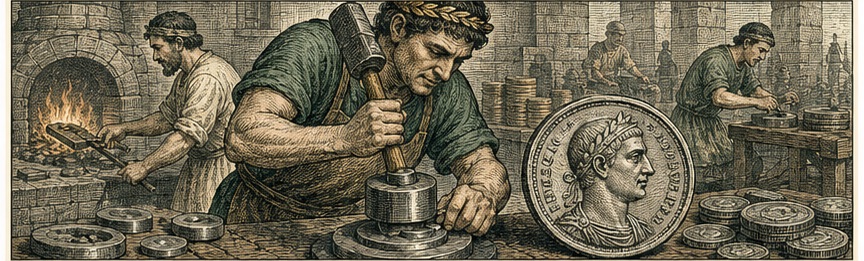
From metal to message
The earliest widely recognized coins appeared in Lydia, in what is now western Türkiye, around the seventh century BCE. Many were made from electrum, a natural mixture of gold and silver, and carried stamped designs. The mark signaled that an issuing authority stood behind the piece’s weight and quality.
That changed the transaction. Instead of testing and weighing raw metal every time, users could count familiar units. Coins joined material value to public information: the object announced what it was supposed to be and who was confident enough to say so.
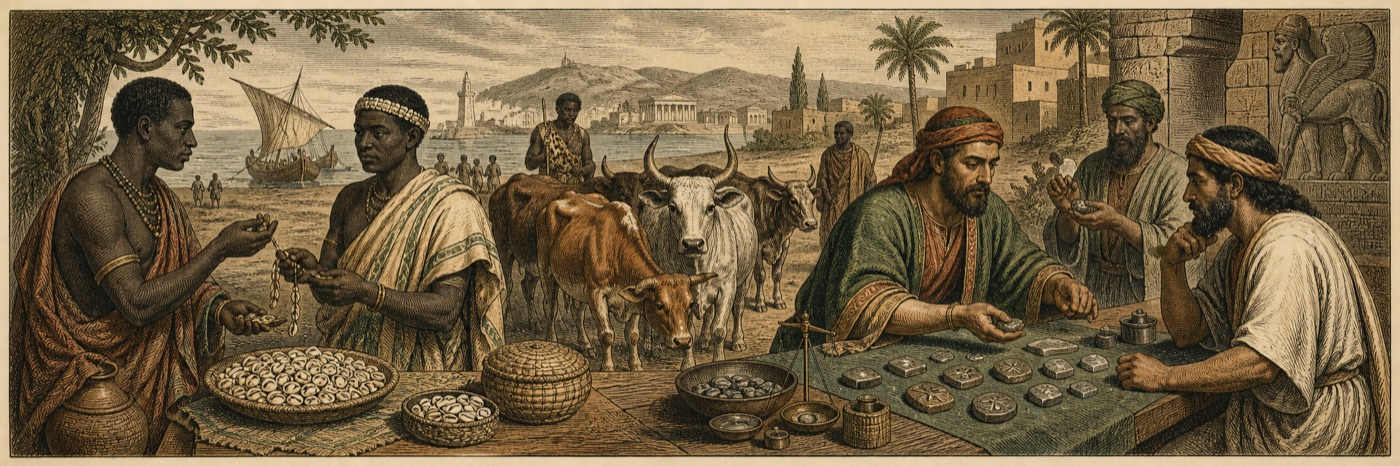
The ruler enters the rectangle—later, the circle
Early designs used symbols such as lions. Portraits became increasingly important as coinage spread, making money a mass communication system that traveled far beyond palaces and armies. A ruler’s image could reach every market without the ruler having to attend, which was good for scheduling and excellent for authority.
Coins also made taxes, military pay and long-distance commerce easier to organize. Their adoption was uneven, and many societies continued using weighed metal or other exchange systems. Monetary innovation has always coexisted with whatever was already working.
The institutional finding
A coin is a miniature public claim: this material, this weight, this symbol and this issuer belong together. Modern currency still relies on that combination of physical design and institutional trust. The main difference is that today the lion requires several accessibility reviews.
Sources & further reading
These references support the factual claims. The institutional conclusions remain the sole responsibility of our highly decorative committee.
- 01British Museum — Money Gallery learning guide
Museum guide covering Lydian electrum and the development of coinage.
- 02The Metropolitan Museum of Art — Greek coinage
An overview of ancient coin production, imagery and circulation.