China tries paper
Paper money emerged from a simple operational insight: a promise written on a light object is easier to transport than the metal it represents. China developed that insight centuries before European banknotes became common, then added seals, warnings and severe performance-management language.
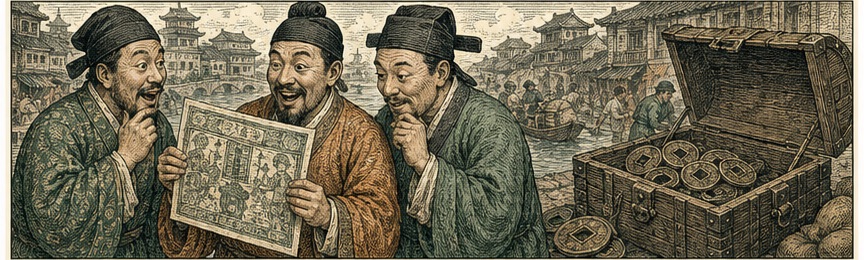
Receipts become currency
Merchants in China had long used paper documents to represent deposits and transfers. Under the Song dynasty, governments increasingly supervised and issued paper money. These notes reduced the burden of transporting strings of copper cash across large commercial networks.
The innovation required something metal did not require to the same degree: confidence in the issuer’s ability to manage redemption and supply. Paper is cheap to print. That is its great logistical advantage and its principal temptation.
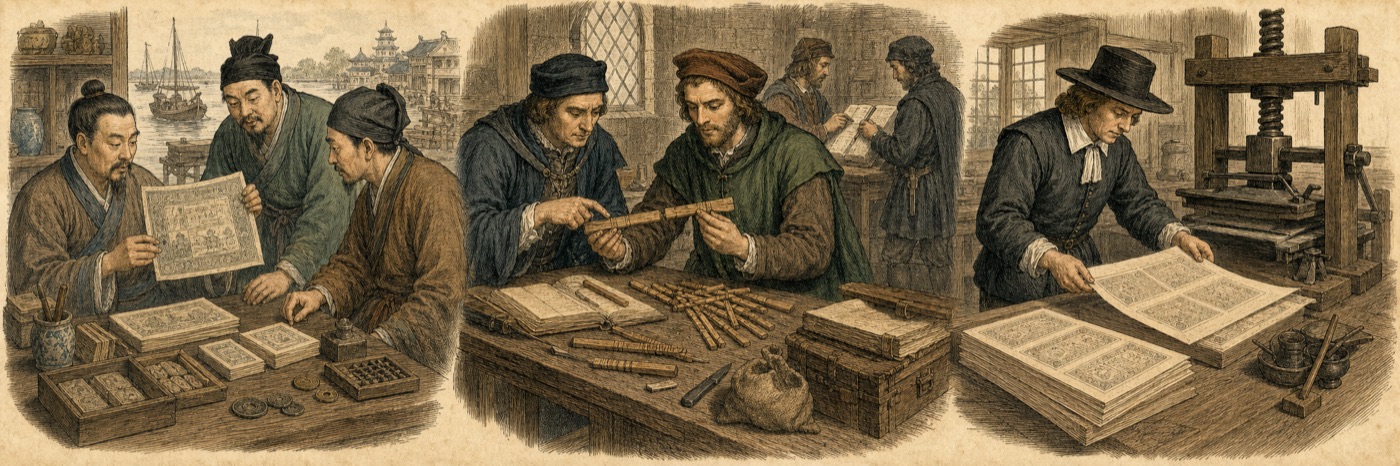
A very serious rectangle
Surviving Ming dynasty notes show how official design supported trust. A one-kwan note could represent one thousand copper coins—roughly three kilograms of metal according to the Bank of Canada Museum. The note includes official seals, denomination imagery and a warning that counterfeiting could be punished by death.
Paper currency therefore combined convenience with enforcement, bureaucracy and visual authority. It asked the public to exchange a heavy object for an official statement about a heavy object. Modern finance would later expand this approach considerably.
The institutional finding
Paper money succeeded when institutions could make the promise credible and restrain over-issuance. It failed when they could not. The lesson is both historical and current: a banknote is inexpensive material carrying expensive confidence. The rectangle is not the value; it is the meeting notice for everyone’s agreement.
Sources & further reading
These references support the factual claims. The institutional conclusions remain the sole responsibility of our highly decorative committee.
- 01Bank of Canada Museum — China’s early paper money
Educational history of Chinese paper currency.
- 02Bank of Canada Museum — Ming one-kwan note
Collection record for a surviving Ming dynasty note.