The dollar gets a job
The Coinage Act of 1792 gave the young United States a mint, an official dollar and a decimal system. It also created several jobs with titles considerably more impressive than the office furniture then available.
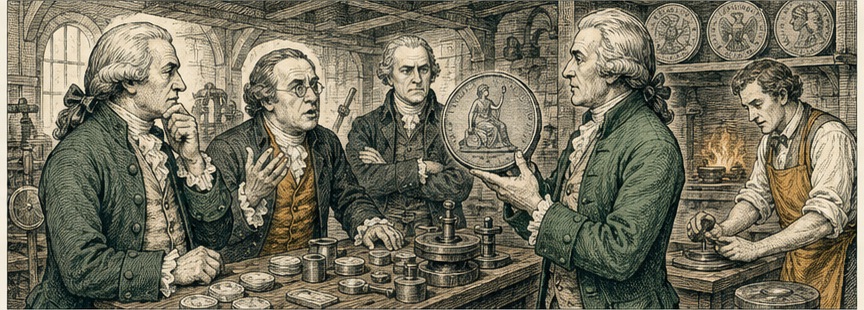
A national unit of account
The act established the dollar as the basic U.S. monetary unit and divided it decimally into one hundred cents. That structure was unusually straightforward compared with systems based on pounds, shillings and pence. The dollar’s value was connected to the familiar Spanish milled dollar already circulating widely.
The law specified denominations, metal content and standards for gold, silver and copper coins. It created the Mint and officers including a director, assayer, chief coiner and engraver—an entire institution assembled to make sure a cent knew exactly what it was.
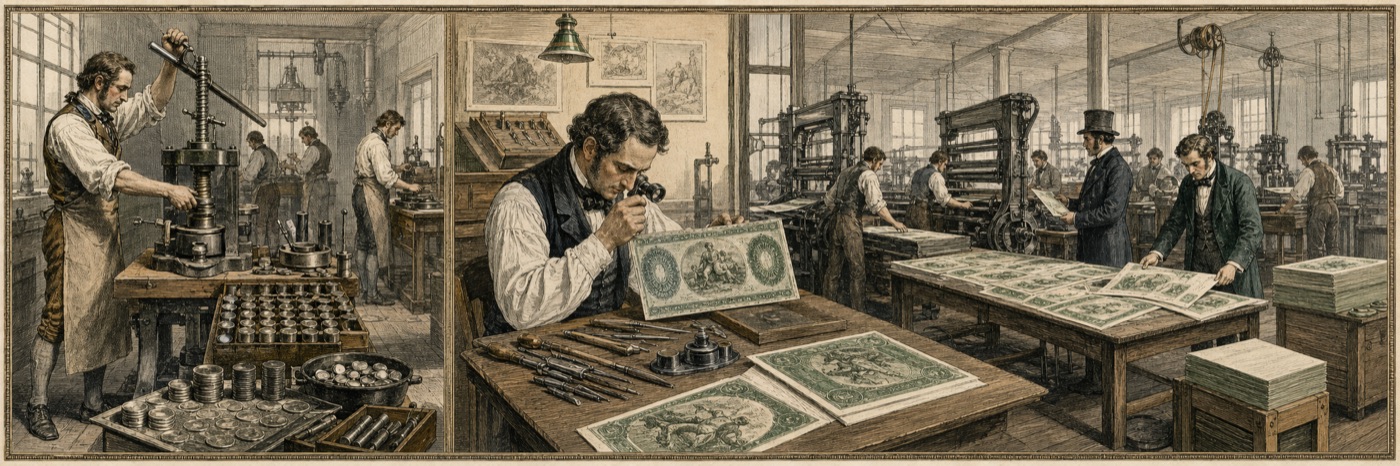
Coins, confidence and constitutional power
A uniform coinage supported trade across states and expressed federal authority. The act also addressed counterfeiting, quality control and accounting. Coinage was not merely industrial production; it was an exercise in making national promises physically consistent.
The first circulating cents were delivered in 1793. Early production was slow and difficult, and foreign coins remained important in American commerce for decades. A law can establish a system immediately; replacing everyone’s pockets takes longer.
The institutional finding
The 1792 system linked units, materials, public offices and enforcement into a single monetary architecture. The decimal dollar became ordinary enough to feel inevitable, which is one of the highest achievements available to infrastructure. The nation finally had an official currency and no personalization controls whatsoever.
Sources & further reading
These references support the factual claims. The institutional conclusions remain the sole responsibility of our highly decorative committee.
- 01U.S. Mint — Coinage Act of April 2, 1792
The Mint’s transcription and background for the founding law.
- 02U.S. Mint — History of circulating coins
Official history of denominations and early production.