Massachusetts prints first
Massachusetts Bay issued the first government-authorized paper currency in the English colonies in North America after a military expedition returned with expenses but without the expected financial ending.
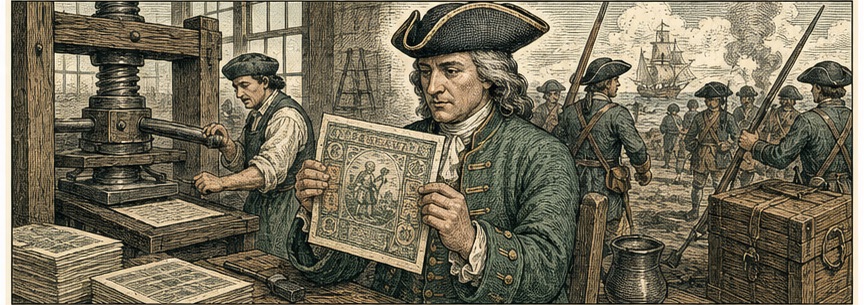
A campaign meets accounts payable
The colony had expected a 1690 expedition against French Canada to produce enough captured wealth to pay soldiers. It did not. Short of coin, Massachusetts authorized bills of credit that promised future redemption and could circulate in the meantime.
The notes solved an immediate public-finance problem: the government could meet obligations without possessing enough metal currency. They also demonstrated that an emergency instrument can become a monetary precedent before the emergency committee has finished clearing the room.
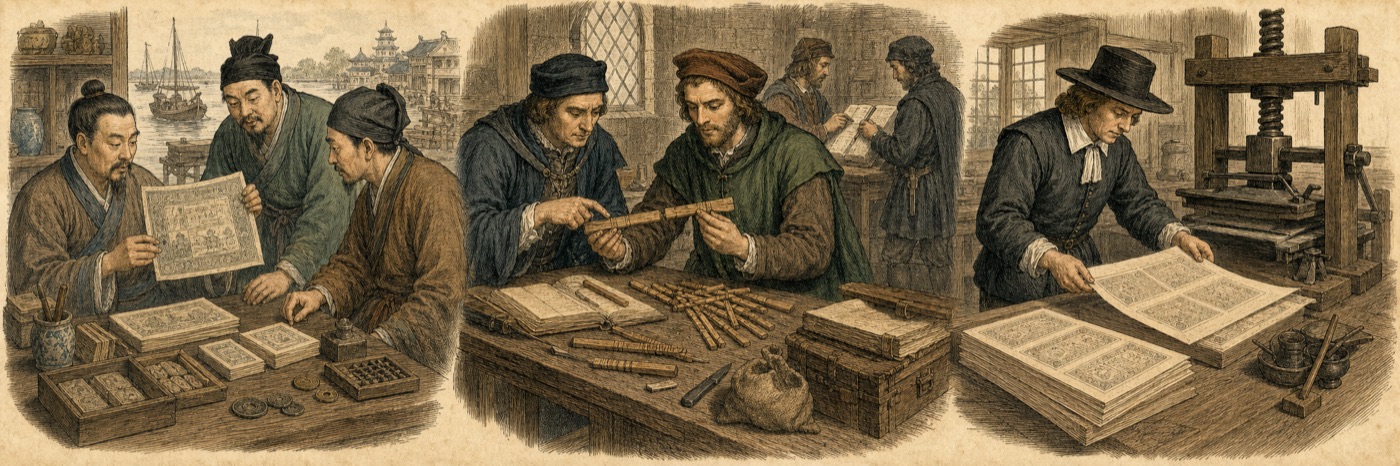
Trust, discount and imitation
Acceptance depended on confidence that the colony would honor the bills through future taxes or redemption. Their market value could vary. Other colonies later issued their own paper currencies, producing a diverse and sometimes unstable landscape of local promises.
The U.S. Currency Education Program identifies the Massachusetts issue as the birth of paper currency in America. It was not a modern national banknote, but it established a durable principle: public authority could create a circulating paper claim when coin was scarce.
The institutional finding
Massachusetts did not discover that paper was valuable. It discovered that a credible future obligation could be sent into the present wearing official typography. The expedition returned without treasure, which was unfortunate for the soldiers but excellent for the stationery department.
Sources & further reading
These references support the factual claims. The institutional conclusions remain the sole responsibility of our highly decorative committee.
- 01U.S. Currency Education Program — History of U.S. currency
Official timeline identifying the 1690 Massachusetts paper issue.
- 02Federal Reserve Bank of San Francisco — American currency history
Federal Reserve educational background on colonial bills of credit.