Greenbacks arrive
The Civil War placed enormous pressure on federal finance. Demand Notes provided a paper answer, printed with green backs that gave American money a nickname it has retained far longer than most branding workshops.
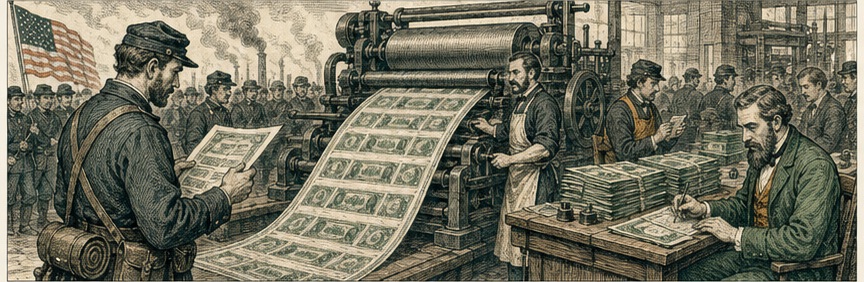
Financing a national emergency
Congress authorized Demand Notes in 1861 as the Union government sought funds for the Civil War. They were issued in denominations of $5, $10 and $20 and could be used to pay public obligations. Unlike later legal-tender notes, their exact legal and redemption arrangements evolved in a rapidly changing financial environment.
The green ink on their reverse helped distinguish the notes and produced the term ‘greenback.’ Anti-counterfeiting inks and complex engraving served practical security purposes, but the color also became part of the public identity of U.S. paper currency.
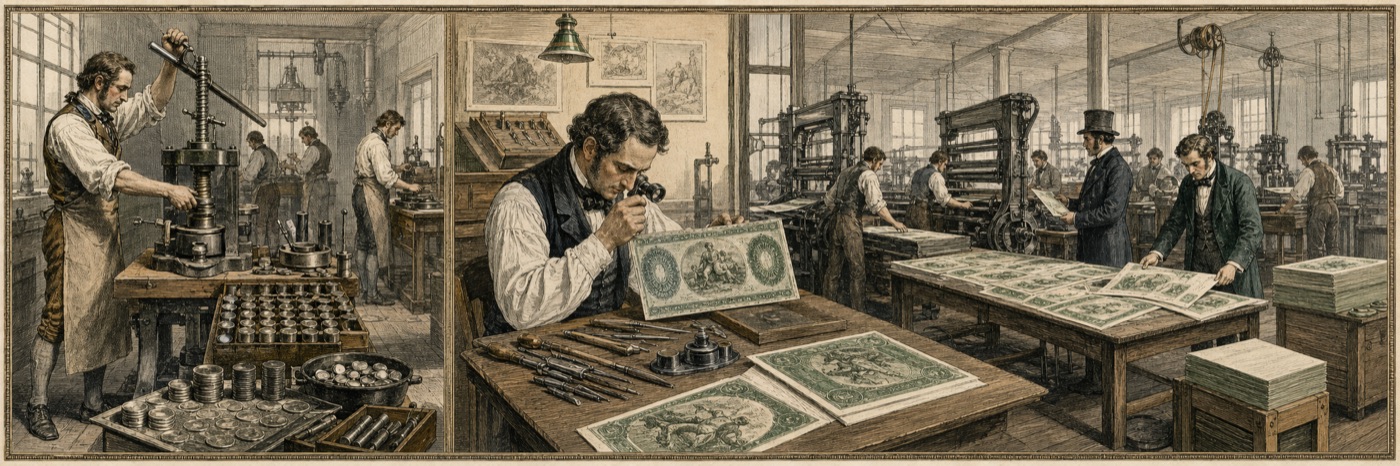
A permanent promise across changing designs
Federal note types multiplied during and after the war: United States Notes, national bank notes, gold and silver certificates and, eventually, Federal Reserve notes. Designs, issuing structures and redemption promises changed, but federal paper money became a lasting part of daily life.
The U.S. government states that all U.S. currency issued since 1861 remains valid and redeemable at full face value. A note may be obsolete as a design and still remain current as an obligation—an unusually patient approach to backward compatibility.
The institutional finding
Greenbacks show how an emergency can accelerate monetary change. They financed government, expanded federal presence in the currency system and made security design part of national visual culture. Their descendants no longer promise payment on demand in coin, but they still arrive dressed for the same color meeting.
Sources & further reading
These references support the factual claims. The institutional conclusions remain the sole responsibility of our highly decorative committee.
- 01U.S. Currency Education Program — History
Official timeline for Demand Notes and subsequent federal issues.
- 02U.S. Currency Education Program — Older designs
Official statement on the validity of older U.S. currency designs.