Portraits need name tags
A portrait can project authority, but it cannot guarantee recognition. In 1889 Congress required the names of people depicted on U.S. securities to appear beneath their portraits, creating an official cure for distinguished-man ambiguity.
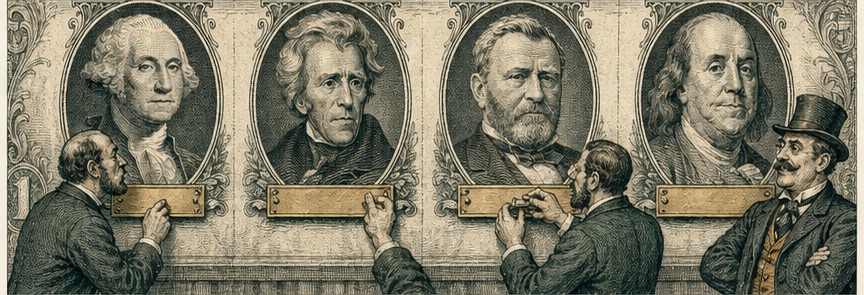
Currency as public portrait gallery
Nineteenth-century U.S. notes displayed presidents, cabinet officers, military figures, allegorical scenes and other public symbols. The variety made currency visually rich but not always immediately clear. A portrait’s institutional purpose depends partly on the public knowing whom it honors.
Congress responded with a requirement that names appear under portraits on bonds, certificates, notes and other securities. The label turned identification into part of the design rather than leaving it to excellent cheekbone recognition.
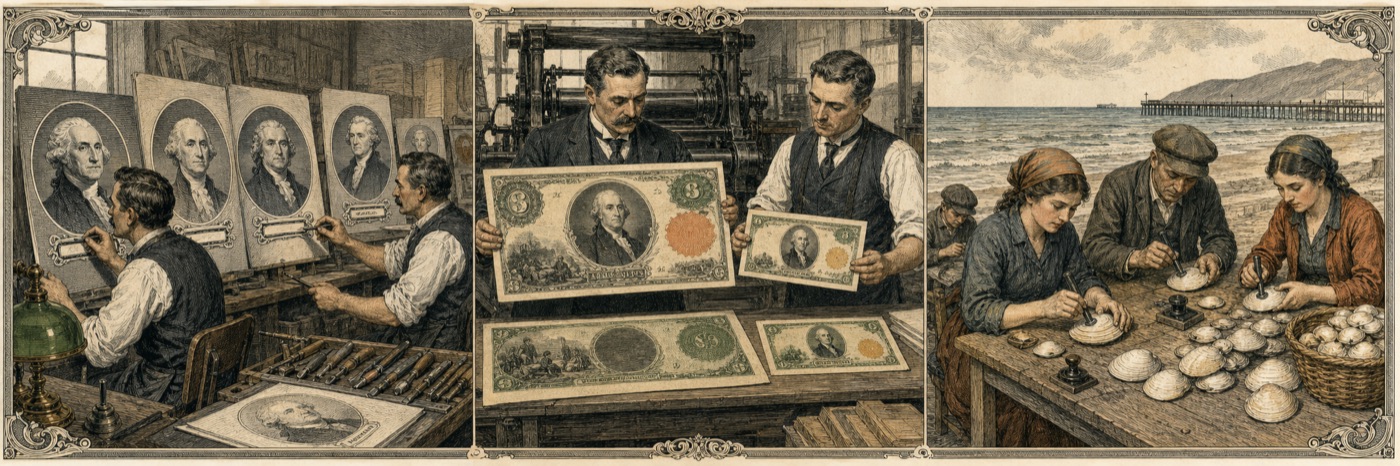
Design carries information
Banknote typography must balance hierarchy, beauty and security. A name beneath a portrait seems minor, yet it changes how a note teaches history. Repeated daily exposure makes currency one of the most widely viewed public documents a government produces.
The requirement also reveals how official design evolves through legislation as well as artistry. Portrait selection, inscriptions, signatures and mottos can all carry legal or political instructions. The note is simultaneously payment instrument, security document and tiny government publication.
The institutional finding
The 1889 rule made a sensible accessibility improvement before anyone called it that. Authority should not depend on insider recognition. Every extremely serious face now had the opportunity to be extremely seriously captioned.
Sources & further reading
These references support the factual claims. The institutional conclusions remain the sole responsibility of our highly decorative committee.
- 01U.S. Currency Education Program — Archived history
Official currency timeline containing the 1889 portrait-label milestone.
- 02Bureau of Engraving and Printing — Currency design
Official background on U.S. currency design and production.